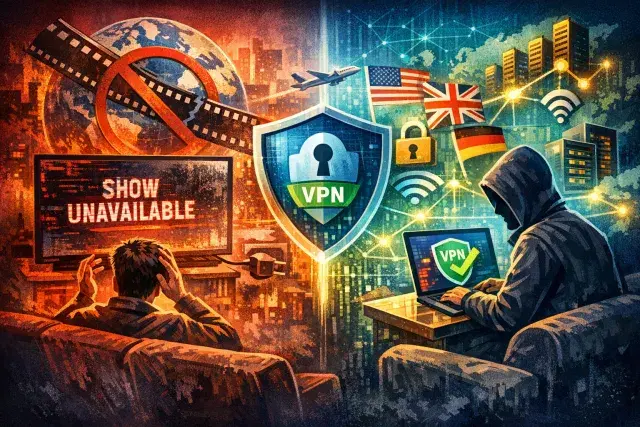

A series can vanish from your account while it is still available on the same platform elsewhere. The reason is usually not a technical failure but the fragmented way streaming rights are sold by country, a system that leaves subscribers paying for access that can shift without warning.
That frustration has helped make VPNs a common companion to streaming subscriptions. Although virtual private networks are primarily privacy tools, many people now judge them by a second standard: whether they can reliably reach region-specific Netflix libraries when licensing borders get in the way.
Why shows disappear even when the platform still carries them
Streaming services do not always own global rights to every title they offer. Film and television rights are often licensed market by market, sometimes to different distributors, broadcasters, or rival platforms at the same time. When one regional agreement expires, a title can disappear in that country even though it remains available in another.
For viewers, the result feels arbitrary. A recommendation stays in circulation online, social discussion continues, and the show may even appear in press coverage of the platform’s catalog. Yet the title is gone at home. This mismatch between a global internet culture and a territorially segmented licensing system is one of streaming’s most persistent irritations.
Why VPNs have become part of the streaming toolkit
A VPN routes internet traffic through a server in another location, making it appear as though the user is connecting from that country. In privacy terms, that helps shield data from local network snooping. In streaming terms, it can open access to a library tied to a different region.
Not every VPN does this well. Streaming platforms actively detect and block many VPN endpoints, so reliability matters more than marketing claims. Services that stand out typically combine large server networks with consistent performance, apps across major devices, and features designed for heavy media use, such as streaming-optimized servers or support for many simultaneous connections in one household.
- Proton VPN stands out for a notably strong free tier and a privacy-focused reputation.
- NordVPN is often favored for its broader premium feature set.
- ExpressVPN is commonly associated with wide geographic coverage.
- TunnelBear appeals to users who want a simpler interface.
- CyberGhost emphasizes servers labeled for streaming use.
- Surfshark is attractive for homes with many devices.
- Hide.me positions itself as a lower-cost option.
What subscribers should evaluate before choosing one
Speed is the first practical concern. Video streaming, especially at higher resolutions, depends on stable throughput, and a VPN adds another layer between the viewer and the platform. The best services limit that slowdown enough that buffering does not become its own form of annoyance.
Device support matters just as much. Some viewers watch on laptops and phones, but many need coverage on smart TVs, streaming boxes, tablets, and home routers. A generous device allowance can matter more than a marginal difference in headline speeds, particularly for families sharing one account.
Privacy should not disappear from the conversation simply because the immediate goal is entertainment. A reputable VPN should still have clear policies, modern encryption, and a credible history of protecting user data. Unblocking a catalog is useful; handing sensitive browsing information to a weak provider is a poor trade.
The larger issue is consumer expectation
The popularity of streaming trained audiences to expect media on demand, across borders, and on their own schedule. Licensing arrangements remain rooted in an older distribution model shaped by national exclusivity and staggered release windows. VPN use is, in part, a consumer workaround for that unresolved tension.
As long as catalogs differ sharply by country, viewers will keep looking for tools that restore a sense of continuity. For now, the most practical approach is to choose a VPN that treats privacy as its core job and streaming access as a proven secondary strength, rather than assuming every service that promises unblocking can deliver it consistently.