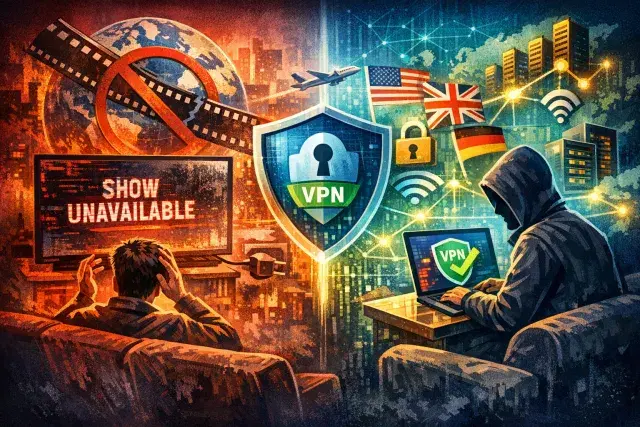

A subscriber in London and one in Lisbon paying for the identical Netflix plan will often find themselves staring at two entirely different catalogs. This is not a glitch. It is the deliberate result of licensing contracts that carve the internet into territories, each governed by its own distribution rights. The frustration this causes has turned geographic workarounds into one of the most common reasons people adopt privacy tools in the first place.
How Licensing Builds Invisible Borders
Studios, broadcasters, and streaming platforms negotiate rights on a country-by-country basis, a legacy of how television and film distribution worked long before the internet existed. A series produced for an American audience may be sold to a separate distributor in Germany or Japan, who then holds exclusive rights in that territory. Streaming platforms enforce these agreements by checking the IP address assigned to your device by your internet provider, a digital marker that functions much like a postal code. Some viewers, tired of losing access to shows they already pay for, turn to browser tools such as the BuyBestVPN Chrome extension to adjust how their location is presented to these services without altering anything else about their connection.
The Mechanics Behind the Disguise
A virtual private network works by routing your traffic through a server in another location and encrypting it along the way, typically using standards such as AES-256. The streaming platform sees only the IP address of that distant server, not your own, and serves content accordingly. Modern VPNs also redirect DNS requests through their own infrastructure, closing a loophole that could otherwise expose your real region even while your IP address appears foreign. This combination of IP masking and DNS handling is what separates a reliable service from a basic proxy, which usually lacks encryption and offers far weaker concealment.
Detection, Countermeasures, and the Ongoing Contest
Streaming platforms maintain blacklists of known VPN server addresses and update them regularly, which forces providers to rotate their IP pools and refine their obfuscation techniques. This is an ongoing technical exchange rather than a settled matter, and it explains why some VPNs work reliably with major platforms while others fail within weeks of a software update. Server count, geographic spread, and consistent speed all affect whether a service can deliver uninterrupted high-definition playback rather than buffering and dropped connections.
Legal Gray Areas and Responsible Use
Using a VPN is lawful in most countries, but streaming through one typically breaches the terms of service of the platform itself, even where no actual law is broken. Enforcement generally results in blocked access rather than legal consequences, though users should understand the distinction between a contractual violation and a criminal one. The more defensible approach treats VPNs as a tool for accessing content you already subscribe to, not as a means of avoiding payment altogether. Free VPN services deserve particular caution, since many monetize usage data or bandwidth rather than offering genuine privacy, which undercuts the very reason people seek them out.